
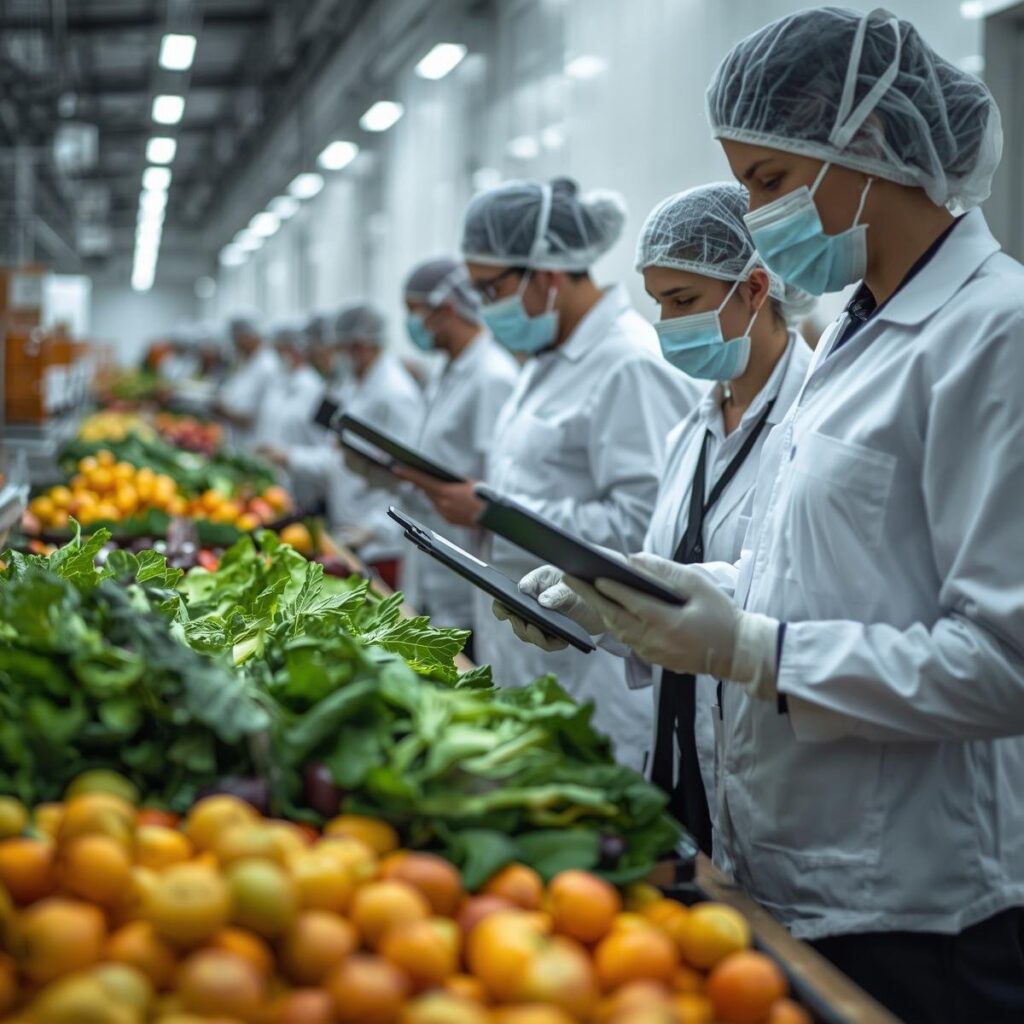
Food and Agrifood Produce Inspections
Introduction
1. What are Food and Agrifood Produce Inspections?
2. Why are Inspections Important?
2.1 Public Health Protection
2.2 Trade and Market Access
2.3 Consumer Trust
2.4 Regulatory Compliance
3. Who is Involved in Inspections?
4. When are Inspections Required?
5. Where do Inspections Take Place?
6. How are Inspections Conducted?
6.1 Risk-Based Approach
6.2 Sampling and Testing
6.3 Documentation and Traceability
6.4 On-Site Audits
6.5 Use of Technology
7. Standards and Regulatory Frameworks
8. Case Studies
8.1 Mango Exports from India to the EU
8.2 U.S. FDA Food Recalls
8.3 Japanese Food Imports after Fukushima
9. White Paper: Future of Food Inspections
10. Industrial Applications of Food and Agrifood Inspections
Conclusion
Why Six Sigma Quality International for Food and Agrifood Produce Inspections and Audits?
1. Linking Deming Philosophy to Food Inspections
Dr. W. Edwards Deming, often called the father of quality management, emphasized continuous improvement, systems thinking, and customer focus. His 14 principles for quality management transformed industries like manufacturing and healthcare. Today, those same principles are being applied to food and agrifood inspections to ensure safety, reliability, and global compliance.
Six Sigma Quality International are essentially a structured performance measurement system that evaluates how well organizations in the food sector apply quality and safety principles across the supply chain.
2. Why Six Sigma Quality International Matter in Food and Agrifood
2.1 Assurance of Food Safety
- Ratings ensure that farmers, processors, exporters, and retailers consistently meet global safety benchmarks (HACCP, ISO 22000, Codex).
- They reduce risks of foodborne diseases and contamination.
2.2 Global Trade & Market Access
- Exporters often face trade barriers due to poor inspection or compliance failures.
- Six Sigma Quality International provide a globally recognized benchmark that importers and regulators trust.
- Higher ratings mean smoother approvals and reduced shipment rejections.
2.3 Consumer Confidence
- In today’s marketplace, consumers demand safe, traceable, and ethically produced food.
- Displaying a strong Six Sigma Quality International signals transparency and reliability.
2.4 Continuous Improvement
- Unlike one-time audits, Six Sigma Quality International emphasize ongoing monitoring, corrective action, and learning.
- Food businesses can benchmark themselves year after year.
2.5 Risk Management
- Ratings help identify weak areas (e.g., poor hygiene, inadequate labeling, weak traceability).
- Early identification prevents costly recalls, bans, and reputational damage.
3. How Six Sigma Quality International Enhance Inspections and Audits
3.1 Standardization of Inspections
- Six Sigma Quality International provide a uniform scoring system to evaluate farms, food processors, warehouses, and exporters.
- This ensures consistency across countries, inspectors, and commodities.
3.2 Integration with Modern Tools
- Ratings can be linked with AI-based predictive analytics, blockchain traceability, IoT monitoring for cold chain logistics.
- This makes inspections more data-driven and less subjective.
3.3 Supplier & Vendor Evaluation
- Retailers, hotels, and global buyers use Six Sigma Quality International to approve or reject suppliers.
- High-rated suppliers get preferential contracts and stronger buyer relationships.
3.4 Transparency for Stakeholders
- Governments, certification bodies, and consumers can access clear, evidence-based performance scores.
- This enhances accountability across the agrifood value chain.
4. Example Applications
- Fruit Exports (India to EU): Mango exporters with higher Six Sigma Quality International show compliance with EU phytosanitary checks, reducing rejection risks.
- Meat and Poultry (USA/Europe): USDA or EFSA audits supported by Six Sigma Quality International ensure hygiene and cold chain compliance.
- Retail Chains (Global): Walmart, Carrefour, and Reliance Retail can use Six Sigma Quality International to benchmark suppliers for consistent quality and food safety.
- Dairy Industry: Cooperative milk producers can maintain traceability and safety assurance across thousands of collection points.
5. Benefits of Six Sigma Quality International in Agrifood Sector
- For Farmers: Access to premium markets, higher income.
- For Processors: Reduced recalls, stronger buyer relationships.
- For Exporters: Faster customs clearance, fewer shipment rejections.
- For Regulators: Data-driven policy decisions, better compliance enforcement.
- For Consumers: Safer, trusted, and transparent food supply.
Conclusion
Six Sigma Quality International bring quality management discipline to the food and agrifood inspection ecosystem. They bridge the gap between traditional audits (which are often checklist-based) and modern continuous improvement systems.
By using Six Sigma Quality International:
- Food businesses achieve higher reliability.
- Governments enforce stricter yet fair regulations.
- Consumers gain confidence in what they eat.
In essence, Six Sigma Quality International transform inspections and audits from a compliance activity into a strategic driver of safety, trade, and trust in the global agrifood system.
Six Sigma Quality International Help Monitor Every Step of the Produce Supply Chain

1. Why Monitoring the Whole Supply Chain Matters
Food safety and quality risks don’t occur at a single point. They can appear:
- At the farm (pesticide misuse, soil contamination)
- During processing (hygiene issues, cross-contamination)
- In storage (temperature abuse, pest infestation)
- In transport (cold chain failures, mishandling)
- At retail (improper labeling, expired products)
Traditional inspections are often snapshot-based. Six Sigma Quality International, by contrast, are system-based and continuous, making them ideal for full supply chain monitoring.
2. How Six Sigma Quality International Track Each Step
2.1 Farming and Production
- Ratings assess whether Good Agricultural Practices (GAP) are followed.
- Check use of fertilizers, pesticides, irrigation water quality, animal feed safety.
- Example: A vegetable farmer gets a higher rating if pesticide logs and soil health records are well maintained.
2.2 Harvesting and Post-Harvest Handling
- Monitoring harvest hygiene, sorting, grading, and packing practices.
- Ratings highlight risks like improper washing, contact with contaminants, or poor handling.
2.3 Processing and Manufacturing
- Focus on HACCP compliance, sanitation, allergen control, and traceability.
- Example: A juice processor with strong HACCP records and pest control measures earns a higher Six Sigma Quality International.
2.4 Storage and Warehousing
- Evaluates temperature control, humidity management, pest monitoring.
- IoT sensors linked with Six Sigma Quality International allow real-time cold chain tracking.
2.5 Transport and Logistics
- Ratings assess packaging integrity, cold chain compliance, and handling protocols.
- Example: A transporter loses points if temperature logs are missing or inconsistent.
2.6 Retail and Consumer Interface
- Focus on labeling accuracy, expiry date monitoring, hygiene in handling.
- Example: A supermarket chain with strong recall systems and traceability earns higher ratings.
3. Tools that Enhance Monitoring Through Six Sigma Quality International
- Blockchain traceability: Every step gets logged in a tamper-proof ledger.
- AI risk prediction: Machine learning predicts contamination or recall risks.
- IoT sensors: Real-time data on temperature, humidity, and transport conditions.
- Digital dashboards: Ratings can be updated dynamically, giving all stakeholders visibility.
4. Benefits of Monitoring Each Step with Six Sigma Quality International
- Early Risk Detection – Problems are spotted at the source before they spread downstream.
- Transparency – Every stakeholder (farmer → retailer → regulator) sees the same data.
- Consistency Across Borders – Exporters can prove compliance with importing countries.
- Consumer Trust – End-to-end monitoring assures customers that food is safe “from farm to fork.”
- Continuous Improvement – Weak spots identified in ratings push companies to improve year by year.
5. Example in Action: Mango Supply Chain
- Farm: Soil pesticide checks logged in rating system.
- Processing: Sorting and hot water treatment compliance scored.
- Transport: Cold chain monitored with IoT sensors, uploaded to rating dashboard.
- Retail: Packaging labeling checked against Deming compliance rules.
- Outcome: Higher Six Sigma Quality International ensures export clearance and consumer trust in EU markets.
Conclusion
Six Sigma Quality International turn inspections into a living, continuous monitoring system for the entire agrifood supply chain. Instead of relying on isolated audits, they:
- Track performance at every stage.
- Use data-driven methods (AI, IoT, blockchain).
- Enable farm-to-fork assurance.
This makes Six Sigma Quality International a strategic tool not just for compliance, but for building resilient, transparent, and trusted food supply chains worldwide.
Six Sigma Quality International Dedicated for Food and Agrifood Produce Inspections

Executive Summary
Food and agrifood supply chains are increasingly complex, global, and vulnerable to risks such as contamination, adulteration, and supply chain disruptions. Traditional inspections and audits, while necessary, often remain fragmented and reactive. Six Sigma Quality International—inspired by Dr. W. Edwards Deming’s philosophy of continuous quality improvement—provide a system-based, measurable, and transparent rating model for food and agrifood produce inspections.
By integrating Deming’s principles into food inspections, organizations and regulators can monitor quality at every stage of the supply chain, identify risks early, and drive continuous improvement while building consumer trust and ensuring compliance with global standards.
1. Introduction
The agrifood sector faces multiple challenges:
- Global foodborne disease outbreaks.
- Trade rejections due to non-compliance with SPS (Sanitary and Phytosanitary) measures.
- Growing consumer demand for transparency and traceability.
Six Sigma Quality International provide a performance evaluation framework that goes beyond checklist inspections. Instead of focusing only on compliance, the system emphasizes quality culture, process control, risk management, and continuous improvement.
2. What are Six Sigma Quality International?
Six Sigma Quality International are quantitative and qualitative evaluation metrics used to measure how effectively food and agrifood businesses apply quality and safety principles across the supply chain.
They combine:
- Inspection outcomes (farm, processing, logistics, retail).
- Audit results (HACCP, ISO 22000, GlobalGAP).
- Performance indicators (traceability, hygiene, risk mitigation).
- Continuous improvement factors (corrective actions, preventive controls, training).
The goal is to provide a single performance score that regulators, buyers, and consumers can trust.
3. Why Six Sigma Quality International for Food and Agrifood Produce Inspections?
3.1 Public Health Protection
- Ensure that all stages of the food supply chain follow preventive controls.
- Reduce risks of contamination, food fraud, and adulteration.
3.2 Trade Facilitation
- Serve as an internationally recognized benchmark.
- Reduce rejection rates at ports and customs due to inspection failures.
3.3 Continuous Improvement
- Go beyond “pass/fail” audits.
- Encourage farms and processors to improve every year, not just meet minimum compliance.
3.4 Consumer Trust
- Transparent ratings displayed on packaging or websites assure customers that food is safe, traceable, and ethically produced.
3.5 Risk-Based Monitoring
- Ratings help prioritize high-risk commodities (e.g., seafood, dairy, fresh produce).
- Optimize resources for inspections.
4. How Six Sigma Quality International Monitor Every Step of the Supply Chain
4.1 Farming & Primary Production
- Evaluate Good Agricultural Practices (GAP).
- Metrics: pesticide use, soil/water safety, animal health, crop records.
4.2 Post-Harvest & Processing
- Evaluate HACCP, sanitation, allergen control, packaging.
- Metrics: hygiene audits, contamination risks, labeling compliance.
4.3 Storage & Warehousing
- Evaluate cold chain integrity, pest control, humidity monitoring.
- Metrics: IoT sensor logs, warehouse audits, traceability records.
4.4 Transportation & Logistics
- Evaluate packaging integrity and temperature monitoring.
- Metrics: GPS and IoT data, handling protocols, shipment records.
4.5 Retail & Distribution
- Evaluate labeling accuracy, expiry monitoring, product recalls.
- Metrics: market audits, consumer complaints, retail hygiene scores.
5. Six Sigma Quality International Model – Example Framework
| Supply Chain Stage | Weight (%) | Key Indicators | Example Rating (out of 100) |
|---|---|---|---|
| Farming & Production | 25% | GAP compliance, pesticide use, soil/water safety | 85 |
| Processing & Packing | 30% | HACCP audits, sanitation, allergen control | 90 |
| Storage & Warehousing | 15% | Cold chain integrity, pest monitoring | 75 |
| Transport & Logistics | 15% | Handling, temperature monitoring, packaging | 80 |
| Retail & Distribution | 15% | Labeling accuracy, expiry checks, recalls | 88 |
Overall Six Sigma Quality International Score = 85/100 (Excellent)
6. Industrial and Regulatory Applications
- Exporters & Importers: Faster approvals, fewer rejections.
- Retail Chains: Supplier benchmarking and selection.
- Regulators: Risk-based inspection planning.
- Certification Bodies: Complement to ISO, HACCP, GlobalGAP audits.
- Consumers: Access to clear, trusted product ratings.
7. Future of Six Sigma Quality International in Food Inspections
- AI integration: Predict risks using historical data.
- Blockchain: Farm-to-fork traceability with rating updates at every stage.
- IoT Monitoring: Real-time cold chain validation linked to rating dashboards.
- Sustainability Ratings: Inclusion of environmental and ethical farming metrics.
8. Conclusion
Six Sigma Quality International transform food and agrifood produce inspections from a reactive compliance exercise into a proactive, continuous improvement system. They allow businesses to monitor every step of the supply chain, ensure compliance with global standards, reduce risks, and build consumer trust.
As food supply chains become more globalized and consumer expectations rise, Six Sigma Quality International provide a dedicated, transparent, and future-ready system to safeguard food quality and safety worldwide.